• Skip to primary navigation
  • Skip to main content
  • Skip to footer
Block I logo
University of Illinois Urbana-Champaign
Allerton Park & Retreat Center

Allerton Park & Retreat Center

  • Visit
    • Plan Your Visit
    • Park Maps
    • McCraw Family Visitor Center
    • Greenhouse Café
    • Accessibility
    • Mansion
    • Gardens
    • Natural Areas
    • Artwork
    • Gift Shop
    • Area Attractions
  • Lodging
    • Book Your Stay
    • Weekend Wind Downs
    • Reservation Policy
  • Weddings & Gatherings
    • Weddings
    • Corporate
    • Special Occasions
    • Event Spaces
    • The Dome
  • Events
          • Calendar
          • Tours & Hikes
          • The Farms Folk School
          • Concert Series
          • Seasonal Special Events
          • Youth Programs
          • Supper Club
          • Understanding Dreams

            August 25 ● 6:00 pm - 8:30 pm
          • Full Moon Yoga

            August 28 ● 7:00 pm - 8:00 pm
          • (SOLD OUT) Beyond Beginning Weaving

            August 29 ● 9:00 am - 5:00 pm
  • The Farms
    • About
    • Courses
    • Classrooms
    • Resources
    • Instructors
    • The Farms FAQ
  • Give
    • Donate
    • Building the Legacy
    • Memorial & Dedicatory Gifts
    • Sponsorship Opportunities
    • Priorities
    • Wish List
    • Volunteer
  • About
    • About Allerton Park
    • History
    • Future
    • In Residence
    • Research
    • Clubs
    • Social Responsibility
    • Staff
    • Advisory Board
    • Employment
    • FAQ
    • Enews Archives
    • Allerton in the News
Social Responsibility

Social Responsibility

Land Acknowledgement

We would like to recognize and acknowledge that Allerton is on the lands of the Peoria, Kaskaskia, Piankashaw, Wea, Miami, Mascoutin, Odawa, Sauk, Mesquaki, Kickapoo, Potawatomi, Ojibwe, and Chickasaw Nations. These lands were the traditional territory of these Native Nations prior to their forced removal; these lands continue to carry the stories of these Nations and their struggles for survival and identity.

As part of a land-grant institution, the University of Illinois, we have a particular responsibility to acknowledge the peoples of these lands, as well as the histories of dispossession that have allowed for the growth of this institution for the past 150 years. We are also obligated to reflect on and actively address these histories and the role that this university has played in shaping them. This acknowledgement and the centering of Native peoples is a start as we move forward for the next 150 years.

Diversity, Inclusion, and Access

Allerton Park and Retreat Center strives to be a reflection of the diverse communities we serve by providing a safe and welcoming space where people of all cognitive and physical abilities, socioeconomic statuses, ages, and ethnic, racial, sexual, gender, and religious identities can thrive.

We will be persistent and intentional in our efforts to ensure all feel welcome at Allerton, while celebrating the uniqueness of all individuals, Allerton Park, and its legacy.

Find information on Park accessibility, including making reservations for power chairs.

Sustainability

The Allerton Park Climate Action Plan (apCAP) was approved by the Park Advisory Board in 2012. The plan lays out a philosophy of “conserve (everything) and load (with renewables)”, with a goal of bringing Allerton to a net zero energy and emissions by 2035. In doing so, Allerton will also strive to serve as a learning laboratory for the demonstration of sustainable technologies – to educate individuals and prepare them to face the challenges of becoming a sustainable society.

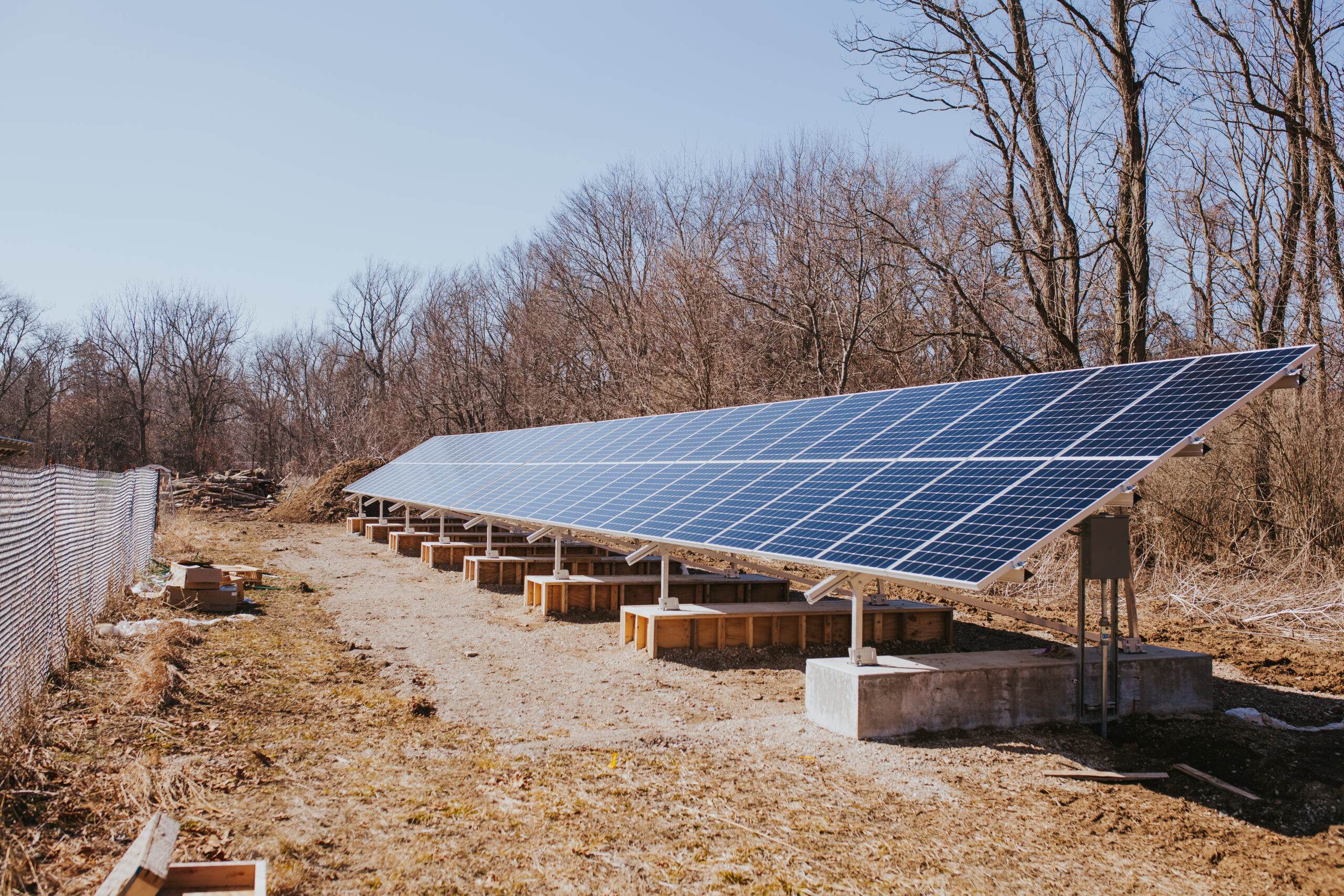
Allerton currently utilizes geothermal energy in the Gatehouse, and solar panels and wood burning furnaces provide energy for all the buildings in the Visitor Center complex. The addition of a composting toilet at the Schroth Trail Parking Lot in 2016 improved visitor amenities on the south side of the Park. For the past several years, we have been collecting discarded rock, brick, and concrete from around the Park and grinding it into material to shore up trails and top parking lots. (Look closely in the Visitor Center lot – you can see bits of gray slate from our last Mansion roof replacement!)

When developing and renovating areas around the Park, as laid out in the Master Plan, we will continue to be conscious not only of the impact on the historical significance of the area, but also the environmental impact. Specifically, as the Visitor Center area is transformed into an area that promotes art, education, and offers unique public engagement opportunities, we will utilize innovative sustainable technologies to help ensure that all permanent development is carbon neutral.

Land Management

Land management techniques are planned to protect, maintain, and enhance this important feature of the Park. Read Allerton’s complete Natural Areas Management Plan, or continue reading to learn more about specific areas of focus.

Prescribed Fire

Spring and fall are the times of year when visitors may discover that areas of the Park have been burned. The application of fire to an area for management purposes is called “prescribed fire”.  Most of our native plants are adapted to fire or depend on it for seed germination, nutrient recycling, reduction of competition, or maintenance of open tree canopies. Fire also stimulates flower and seed production in many native plant species, and more flowers and seeds are produced following a burn. Many tree, shrub, herb, and wildlife species cannot survive without the complex effects of occasional fire.  Returning the natural process of periodic fire to our Natural Areas helps to restore and maintain hundreds of native species that would otherwise be lost from these sites.

Both exotic and native species can become invasive and disturb the ecological balance in habitats where they do not belong. With the loss of a natural fire regime, populations of invasive species have become so high that they shade out light-dependent woodland plants such as oaks, hickories, hazelnuts, and associated grasses and wildflowers. This leads to a loss of plant diversity and the wildlife adapted to living with them. Controlled burning helps to eliminate non-native invasive plants (e.g., bush honeysuckle, multiflora rose) and reduce aggressive native trees (e.g., sugar maple, box elder, black cherry) to a more natural density and distribution.

Prescribed burning helps to manage invasive plants and encourage the growth of native species that are characteristic of healthy ecosystems. Often, invasive grasses and forbs are among the earliest species to begin growth after winter. For this reason, spring burns can reduce many invasive species while other plants are still dormant. Fire becomes more effective over time, gradually increasing the numbers of species that naturally occur in natural communities.

Research has shown that fire-sensitive native species re-colonize burned habitats rapidly from nearby unburned areas, often occurring in large numbers within a year or less. Over time, many of our rarest, fire-sensitive prairie invertebrates (butterflies, native bees, and others) have been found to be most abundant on sites maintained with regular burning.

Fire reduces understory competition and allows spring wildflowers to prosper. When these forest types are excessively shaded, whether by non-natives such as bush honeysuckle or an invasive native such as sugar maple, sufficient light does not reach the wildflowers and grasses that hold the soil, and support wildlife living on the forest floor. The shade also prevents oak and hickory regeneration. The thinning of invasive trees by controlled burning restores and maintains the quality and structure of most of this region’s original natural forest types.

The next time you see smoke rising from Allerton – don’t be concerned. Pay close attention to that area in the future and enjoy the sights, sounds and true beauty that Allerton’s natural communities have to offer.

Invasive Species Management

While the potential for numerous exotic species problems are high at a site with arboreta and gardens of non-native plants, the major exotic species problems at Allerton Park are species which are problems statewide – garlic mustard, bush honeysuckle, Japanese honeysuckle, and multiflora rose.

Garlic mustard is widespread and locally abundant, primarily in, but not restricted to, floodplains, ravine systems, and other naturally or artificially disturbed sites. The honeysuckles and multiflora rose are widespread and occasionally common where found. Multiflora rose tends to be more common in formerly grazed areas and along edges, while the honeysuckles are found in the forests as well as successional sites. These three species are widely dispersed by birds and mammals.

Other exotic species such as Oriental bittersweet, smooth buckthorn, winged wahoo, privet, osage orange, wisteria, autumn olive, and black locust are present and have potential to become much greater problems in the future. These species are managed where encountered.

In addition to prescribed fire, our dedicated volunteer group, the Allerton Allies, have been instrumental in manually removing numerous invasive species around the Park. Find more information about volunteering at Allerton.

Deer Management

In the early part of the 20th century, Illinois and several neighboring states enacted protective deer legislation to help stop the decline in population due to over-hunting. Bans on hunting, the elimination of major predators, and the restoration of some habitats along river corridors and in state and national parks caused a rapid increase in the deer population. Today, many researchers believe that there are more deer than there were prior to the settlement of the region.

The deer population in Illinois rebounded so effectively because deer are well adapted to living and reproducing in the “edge” areas between agricultural lands and urban regions. This situation is exemplified well at Allerton.

Deer find refuge in the Park during the day, and graze in the numerous surrounding corn and soybean fields at night. In winter and early spring, the Park vegetation provides food to sustain the deer until summer. In early spring, deer browse on emerging wildflowers and seedlings. Once the deer population exceeds a sustainable number the forest becomes overgrazed, and this disrupts and damages the natural processes of the forest. Wildflowers begin to disappear because they cannot grow to maturity to reproduce, and the tree population ages with little reproduction, since the deer eat the emerging saplings. With virtually unlimited food and milder winters with less snow, there is no natural saturation point at which the herd size would naturally stabilize. Without human management deer herds would continue to grow.

In 2004 deer numbers in the Allerton area reached an all-time high of around 730 (based on an aerial survey), equivalent to about 163 deer per square mile (most biologists recommend a sustainable density of deer to be between 10-30 deer per square mile).  A management plan to reduce the number of deer in Allerton Park became critical.

That fall the first phase in a deer management program was initiated in the form of a 7-week archery hunt. An archery hunt was chosen over alternative methods of deer control for reasons of safety, efficacy, and Illinois Department of Natural Resources (IDNR) approval. Since 2004 Allerton Park has implemented shotgun hunting (2005, 2006) and professional sharpshooting (2004-2006) as well as continued to allow archery hunting (2004-Present). Through aerial surveys we now believe the Allerton deer population to be between 150-250 deer (14-23 deer per square mile).

The deer management program is closely tied to research programs examining deer health and assessing ecosystem regeneration. To ascertain deer health, all deer harvested at Allerton are tested for diseases such as chronic wasting disease, Lyme disease, West Nile Virus, tuberculosis, and epizootic hemorrhagic disease.

To gain an understanding of the impact of deer on natural areas, numerous deer exclosures were constructed throughout the Park. Large exclosures were planted with oak and hickory seedlings and paired with a control planting outside of the exclosure. Smaller exclosures were placed over patches of wildflowers that are commonly damaged by deer to monitor the growth and reproduction of wildflower species as they are released from browsing pressure. In summer 2005, a research project was initiated to document the abundance of deer ticks and Lyme disease in the Park and their relationship to white-tailed deer density. Current deer research at Allerton is the most significant research on deer in central Illinois since the early 1980s. Findings from the research are highly valuable to the IDNR, as well as to others with similar deer management issues.

Currently, about 35 archery hunters are part of the Allerton Hunting Program. All hunters are required to volunteer 30 hours at Allerton, constituting one of our biggest volunteer groups and assisting with various projects, including: invasive species management, trail clearing/work, painting, event parking, the Family Campout, and wedding set-up.Hunters are also required to pass an annual archery proficiency exam, harvest an antlerless deer before harvesting an antlered deer, and abide by a strict set of site specific hunting regulations.

Apply for the Allerton Hunting Program

Allerton Logo


515 Old Timber Road
Monticello, Illinois 61856
217-333-3287
allertoninfo@illinois.edu


NRHP Opera House logo Trip Advisor logo Wedding Wire logo the knot logo

Connect

  • Contact
  • Press Archives
  • Staff

More Links

  • Event Calendar
  • Lodging
  • Donate
  • Sign Up for Allerton News

Logomark

Footer

Explore Campus

  • University Admissions
  • Careers at Illinois
  • University News
  • Visit Campus

Connect with Illinois

  • University Alumni
  • Giving at Illinois
  • University Calendars
  • University Directory

Access University Resources

  • Emergency Services
  • McKinley Health Center
  • Connie Frank CARE Center
  • University Library

About Cookies Privacy Copyright Accessibility Site by Neon Moth Login