
Land Acknowledgement
We would like to recognize and acknowledge that Allerton is on the lands of the Peoria, Kaskaskia, Piankashaw, Wea, Miami, Mascoutin, Odawa, Sauk, Mesquaki, Kickapoo, Potawatomi, Ojibwe, and Chickasaw Nations. These lands were the traditional territory of these Native Nations prior to their forced removal; these lands continue to carry the stories of these Nations and their struggles for survival and identity.
As part of a land-grant institution, the University of Illinois, we have a particular responsibility to acknowledge the peoples of these lands, as well as the histories of dispossession that have allowed for the growth of this institution for the past 150 years. We are also obligated to reflect on and actively address these histories and the role that this university has played in shaping them. This acknowledgement and the centering of Native peoples is a start as we move forward for the next 150 years.
Diversity, Inclusion, and Access
Allerton Park and Retreat Center strives to be a reflection of the diverse communities we serve by providing a safe and welcoming space where people of all cognitive and physical abilities, socioeconomic statuses, ages, and ethnic, racial, sexual, gender, and religious identities can thrive.
We will be persistent and intentional in our efforts to ensure all feel welcome at Allerton, while celebrating the uniqueness of all individuals, Allerton Park, and its legacy.
Find information on Park accessibility, including making reservations for power chairs.
Sustainability
The Allerton Park Climate Action Plan (apCAP) was approved by the Park Advisory Board in 2012. The plan lays out a philosophy of “conserve (everything) and load (with renewables)”, with a goal of bringing Allerton to a net zero energy and emissions by 2035. In doing so, Allerton will also strive to serve as a learning laboratory for the demonstration of sustainable technologies – to educate individuals and prepare them to face the challenges of becoming a sustainable society.
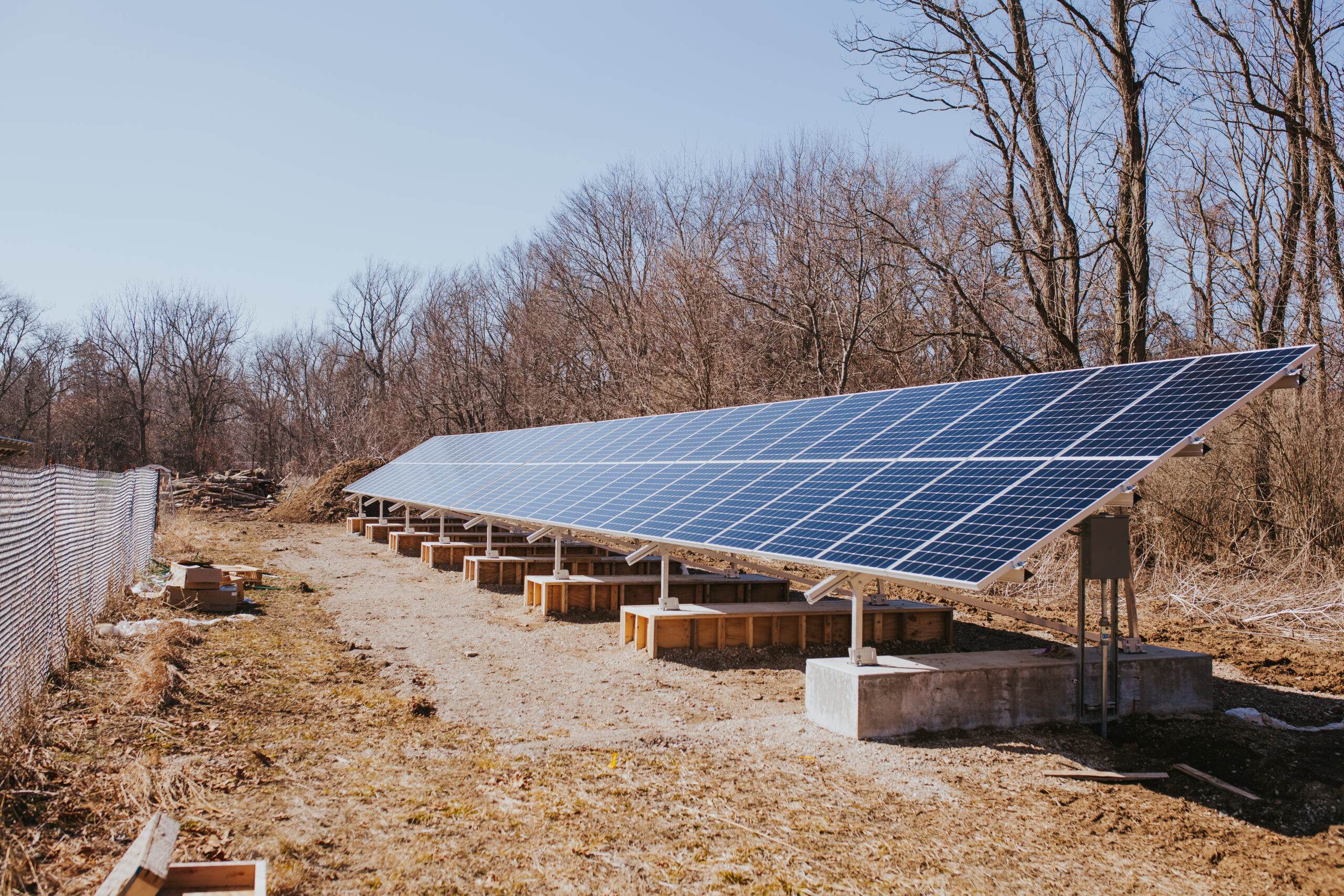
Allerton currently utilizes geothermal energy in the Gatehouse, and solar panels and wood burning furnaces provide energy for all the buildings in the Visitor Center complex. The addition of a composting toilet at the Schroth Trail Parking Lot in 2016 improved visitor amenities on the south side of the Park. For the past several years, we have been collecting discarded rock, brick, and concrete from around the Park and grinding it into material to shore up trails and top parking lots. (Look closely in the Visitor Center lot – you can see bits of gray slate from our last Mansion roof replacement!)
When developing and renovating areas around the Park, as laid out in the Master Plan, we will continue to be conscious not only of the impact on the historical significance of the area, but also the environmental impact. Specifically, as the Visitor Center area is transformed into an area that promotes art, education, and offers unique public engagement opportunities, we will utilize innovative sustainable technologies to help ensure that all permanent development is carbon neutral.
Land Management
Land management techniques are planned to protect, maintain, and enhance this important feature of the Park.